



There is a sense of freedom that connects everything that I create, which mirrors how I think, and what emerges belongs to me, running on my machine, answering to no one else.
My telos is a local operating system that reflects my intelligence, my synthesis, my accumulated understanding across every domain I work in, maintained by my own hands.
My methodology is low time preference applied to infrastructure. I invest the time once to understand and build something correctly, and then it runs at zero ongoing cost, zero dependency. The upfront cost is attention and clarity. The long-term payoff is complete ownership. The local machine runs whether Anthropic exists or not. The scripts run whether this model exists or not. Zero ongoing token cost, zero dependency on an agentic loop that charges you for every step it takes on your behalf. That is the economic difference, and it pairs directly with the moral question, or should I say integrity? because financial dependency on a machine is the same mechanism as any other form of slavery. It is the same principle as Bitcoin for money. You hold your own keys or someone else holds them for you. You run your own scripts or someone else runs them on your behalf, at their price, on their terms, until they decide otherwise.
It works long term because I understand every layer. When something breaks, I can open the file and read it. When something needs to change, I change it. When a new domain needs a tool, I build one the same way I built the last one. The system grows with me because I am the system.
Trust is a question everywhere, all the time. You start trusting the way you deal with money with a corrupt system. Trust is also very important in behavior, politics, and human interaction. My constitution is based on who and why I can trust, and how I build the structure of trust. If I want to use a machine to support my productivity, I have to ask: can I trust the machine fully, or am I going to create a monster that is going to make me codependent and a slave, both financially and psychologically? The artifact I create is just a device that is going to be based on logic, it is going to have a function of being on the art of synthesis, and it is going to create an outlet for me to become even more practical and functional with my ideas. It is a support system. Just see what social media did to our minds, hijacking them for over fourteen years.
The intelligence I consult is distributed and intentional. I use Claude as a thinking partner for synthesis and complex builds. I use Gemini as a verification layer. There is no single source that deserves unconditional trust, including my own intuition in certain moments. When I triangulate between different models that have genuinely different ways of working, different memory architectures, different problem-solving approaches, I get closer to what I actually mean than either one alone could deliver. I am working with different brains, and that combination serves my intention.
When a tool starts costing me more than it gives me, my nervous system registers it as debt.
Financial slavery and psychological slavery are the same mechanism, and I have no interest in replicating that mechanism inside my own operating system.
Some of you may ask, do you not respond to any authority if you are running your own thing? And I will say, yes. My own integrity, not a moral external axis. That is the premise. When you want to play in the big leagues and you want to be free, you have to understand what authority really stands for. Then you have to do a daily, if not minute to minute, accounting of how your integrity vertical line is standing, on which principles and which virtues you are practicing, as opposed to waiting for an outside compass to tell you that you are right or going the wrong way, because this is not a moral issue. This is an integrity issue.
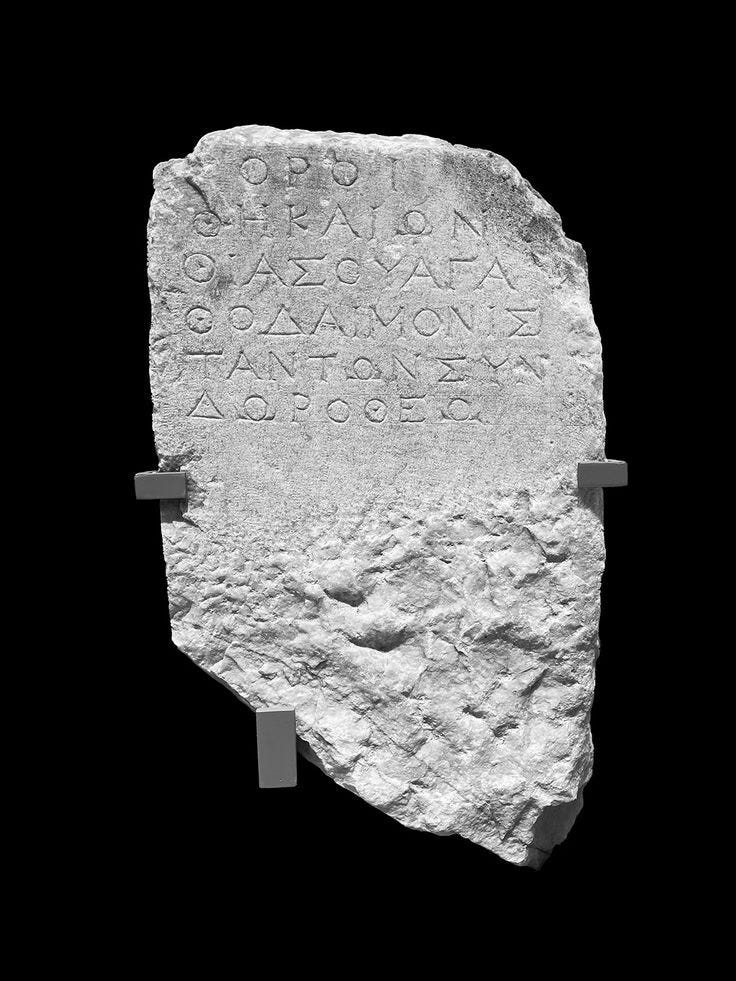
This is an evolving question, this is not a question to be asked and then have a simple yes or no answer. This is actually what makes the individual orient themselves toward a final purposeful behavior that Aristotle called eudaimonia, where logic plays a very big role but also integrates the psychological components of conditioning that has encased our way of thinking and our freedom, until the human, that means you or me, decides to break free from the shackles and decides to investigate what a more free, low time preference society will look like, if we were to be wholesome, self-determined, and flourishing.
The direct influence or inspiration that Ludwig von Mises received from Aristotle was the whole concept of logic. That is why he named the practice of logic praxeology. Basically, he said that we all have purposeful behavior that will lead to innovation, productivity, and collaborative relationships that, in that sense, will lead society to innovation and flourishing at every level, not just spiritually, mentally, emotionally but also economically.
And the question I left open then is the same question that grounds everything I am building now: “What does it mean to deploy agency without consciousness? The only integrity response is to refuse until we understand what we are being asked to do.”
Anthropic recently chose to restrict the release of its latest model because it demonstrated autonomous cybersecurity capabilities that alarmed even its own early testers. Dario Amodei acknowledged that withholding it has hurt Anthropic enormously commercially, and he did it anyway. His stated reason: a human must always make the final call. “This is like a human, what we have seen here is Claude assists, but a human makes the final call. Imagine if you had a world in which the AI model just makes the decision and the human never sees it. That is what we were standing up for. That is what we were fighting against.”
I wrote that same reasoning from my reading of his astrological chart back in March, before this interview existed. I am not saying this to prove I was right. I am saying it because it confirms that the question is not about the technology. It is about the human being holding the line.
While walking on Venetian Way this morning, I counted at least twenty cars driving themselves alone. First it made me laugh and then it made me think: holy shit, everything is here. All these self-driven machines, robots, AI. That is why I think my constitution is important for me. I do not know what you are going to do, but I know what I am doing, or at least I am not going to comply without more than a fight.
Every external integration promises convenience and delivers a cost you did not plan for, in tokens, in dependency, in the quiet accumulation of systems you no longer fully own.
The question this article leaves open, and the question I have been writing a book about, is this: is the human capable enough, knowing the difference between integrity, ethics, principles, and morality, to remain the one who determines what the artifact is for?
A question worth sitting with, and one I am leaving open intentionally: at what point does insisting on manual synthesis become a form of control that limits the very flourishing I am building toward? By keeping the human as the one who pieces everything together, I may be creating a bottleneck in my own system as the gap between what an agentic loop can process and what a human can manually integrate keeps widening.
The distinction I am holding is this: there is a difference between an agentic system I own, understand, and have built myself on my local machine, and an agentic system I rent from a corporation that runs on their infrastructure, at their price, on their terms, until they decide otherwise. My constitution does not forbid the first. It forbids the second. A script that runs an agentic loop locally, reading my files, calling an API with my own key, writing outputs back to my folders, costs nothing except the API call, runs on my machine, and answers to no one else. That is still my system.
I am not there yet. I am coding my way toward it.
In Aristotle’s language a technique is a skill, the artifact is what the skill makes, and when the skill is applied with full understanding of its purpose in a human life it becomes art. In essence the artifact is the tool in which the human and the machine operate creating innovation not extraction. Therefore, the script is the artifact, knowing what it is for and using it with that purpose intact is the art of living. Or in my case, the art of synthesis.
—
As part of launching my brand new colorful website, a synthesis of my last 30 years, I created 6 short video capsules for the landing page. #value
Synthesis as perfection rather than pursuit

Hi. I can’t believe how fast this year is flying. We reached the solstice.

The Shape of the Space I Did Not Know I Needed

What happens when you leave space for yourself? You don’t do it in just one day that you cross off the calendar and cancel your appointments, so you decide to go out for a walk and keep walking the w…


