


What organizes human life?
What preserves agency in an age of increasing entropy?
How does a human being create order without surrendering freedom?
When there is entropy, we create a system. We create an alignment.
Order
Order requires deliberate, sustained effort. Entropy is the tendency for structure to dissolve when that effort is absent. Let's say that it operates in different contexts.
In physics, it is a natural tendency of energy to become more dispersed and les s available to do work. In some other kind of information theory, entropy is the uncertainty or unpredictability. In living systems, entropy is the drift towards disorder unless energy is continually invested to maintain organization. In human action, entropy is the gradual decay of coherence, relationships, habits, institutions, or knowledge when they are no longer cultivated.
So a concise pairing could be: Order is the sustained investment of energy into coherent structure. Entropy is the spontaneous drift away from that structure. Or in a more philosophical form, order is maintained. Entropy is what happens by default. This distinction is important because entropy is not "evil" or a force with intentions. It describes the statistical tendency of systems to move toward more probable, less constrained states, and less energy and information are continuously applied.
Order demands continuous energy
I would say still that entropy is one of the most misunderstood concepts in science. Often translated as disorder, chaos, randomness, they don't really describe it in a useful way so it describes the tendency of systems to move toward states that require less organization, left on its own. A garden becomes overgrown. A house gathers dust. A language changes. A body weakens. A civilization loses coherence. Nothing has to attack these systems. The absence of sustained work is enough. Every organized system requires a continuous investment of energy to preserve its structure.
A living cell constantly repairs itself, the immune system patrols the body, muscle strengthening only through repeated use, memory requires reinforcement, trust requires action, freedom requires responsibility. Therefore it is an ongoing process, not a static condition. Life itself is an extraordinary example of this principle because every organism exports entropy into its surroundings while maintaining an internal state of remarkable organization.
We eat, we breathe, we repair, we eliminate waste, we sleep and move because remaining alive is an active process rather than a passive one. From a psychological perspective health is the body's continuous capacity to preserve coherence while adapting to change.
Aging may be understood as the gradual accumulation of entropy that eventually exceeds the body’s repair mechanism. Entropy appears whenever attention fragments. Relationships deteriorate through neglect more often than through conflict. Skills disappear when they’re not practiced. Values become slogans when they’re no longer embodied. Spiritually entropy invites another question.
Intervals
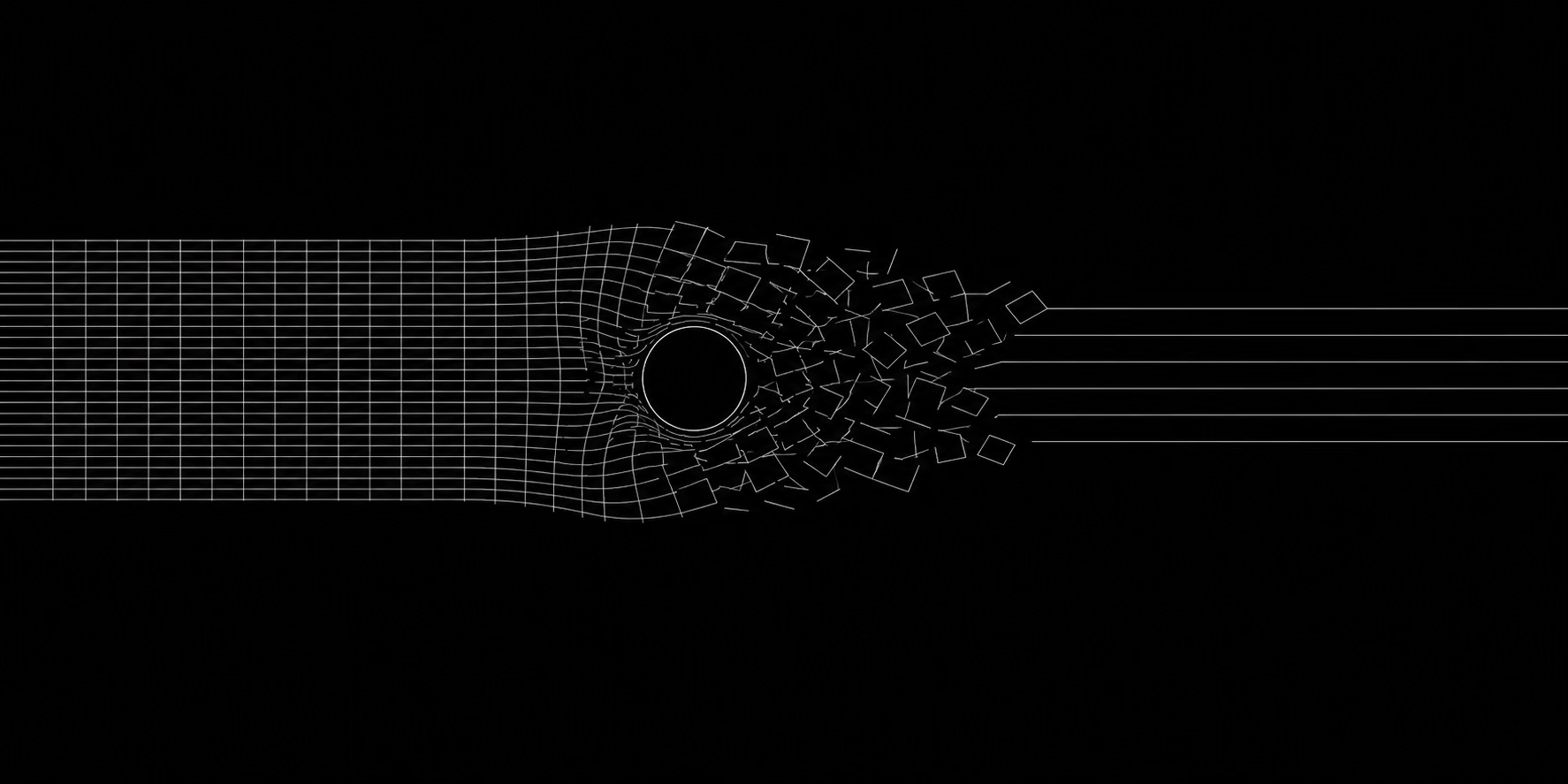
Gurdjieff described this exact same phenomenon. A line moving straight ahead eventually loses power. The entire system implodes. He mapped this process using musical scales. The half-step intervals like mi–fa and ti–do act as cosmic speed bumps. Momentum stalls at these points; evolution stops, decay sets in immediately; a deliberate shock changes the outcome.
External effort forces the system onto a higher level. Conscious action overrides automatic decline. Chaos, entropy, and what Gurdjieff called the interval are not interruptions to life. They are moments in which our existing organization is no longer sufficient. They invite observation, calibration, adaptation, and choice. Crisis then becomes more than disruption, it becomes the threshold through which a new alignment can emerge.
Objective View
Evolutionary astrology offers another way of observing entropy. The sky reveals a quality of a moment in time. It provides a symbolic language through which we can observe recurring development patterns, both individually and collectively, and whether they are in resonance or dissonance according to the relationship they establish between them and between who is observing them.
The recent Full moon across Leo and Aquarius illuminated precisely this tension. The Sun and Jupiter in Leo brought attention to the individual, the identity, creative expression, and sovereignty, and the capacity to radiate from one's own center. Opposing them was Pluto and the moon in Aquarius, exposing the forces reshaping the collective institutions, network systems of belonging, and the structures through which society organizes itself.
It was creating a T-square with Chiron in Taurus, making anything that is related to value, and needs very vulnerable. Entropy appears whenever an existing form no longer carries enough coherence to sustain itself, so sometimes this becomes visible in our personal lives. We recognize habits that no longer reflect who we are. We discover relationships that have lost reciprocity. We realize that the identities we once inhabit have become too small for the person we are becoming.
The same principle unfolds collectively: institutions reach their limits, borders are tested, economies reorganize, technologies redistribute power, and social agreements that once appeared stable begin to reveal their fractures. These moments are not evidence that order has disappeared. They reveal that an existing order can no longer contain the complexity that has emerged.
The current nodal axis continues to sharpen this process. As the attention moves towards Leo, each person is invited to examine the coherence of their own center:
How do I create?
How do I value it?
Where do I seek validation?
What is authentically mine to contribute?
The collective can only reorganize through the quality of the individuals who compose it. Aristotle understood the city as a political community oriented toward the good life and shaped by the character and actions of its citizens. The purposeful behavior of individuals and the policies through which a city organizes itself describe the collective. Every civilization is ultimately built from Human Action. Every human action begins with a choice, and every choice either strengthens coherence or contributes to entropy.
Invasion & Pledging the Fifth
Just watching 60,000 young male Moroccans illegally crossing the borders of Spain in Ceuta in 24 hours was quite astonishing, seeing that Europe is being invaded. There is no way that order can be created, so that's another form of entropy: how you disorganize a system by allowing open borders and not understanding that this is going to create chaos in society. Economically, you cannot sustain that. You cannot just allow so many people to come in with no structure and then demand the country to give them documentation, give them jobs, and give them food. At the very end, in all socialist countries, the question is: who's going to pay for that? That, for me, is entropy.
An institution decaying from within provides a clear picture of societal entropy. Anthony Fauci, who received a presidential pardon, sat before Congress this week and repeatedly pled the Fifth Amendment. This situation presents a clear oxymoron: a pardoned public official taking refuge in constitutional silence. The White House now confirms what critics like myself labeled a "conspiracy theory" from the beginning. The entire scam pandemic response operated through unlawful mandates, forced vaccinations, and public deception. The primary figure responsible for these policies stands before Congress and mocks accountability. Yet I also assign responsibility to everyone who complied with the mandates and helped Mr. Fauci become so entitled, detached, and behaved above natural law. This complete erosion of institutional trust shows entropy dismantling governing authority when integrity ceases to maintain order.
Bitcoin seed phrase
Bitcoin offers a fascinating counterpoint to the way we normally think about entropy in biology. We preserve life by creating internal order. In cryptography, we preserve security by creating predictability through randomness. When generating a Bitcoin private key or seed phrase, entropy is not something to eliminate. It is precisely what must be maximized. The security of the system depends upon randomness that cannot be predicted, reproduced, or manipulated.
High quality entropy ensures that no meaningful pattern exists for an attacker to exploit. Those 12 to 24 words represent an astronomically large space of possibilities. Their security depends upon the absence of recognizable structure. If that randomness is compromised, even slightly, entropy decreases, and as entropy decreases, predictability increases. As it increases, security begins to erode.
What appears to be a technical problem is also a philosophical one. Every system carries assumptions. We often trust that those assumptions are sound until an unexpected event reveals where coherence was only apparent. This is the time that we're living in, because the ruler of the North Node is Uranus in Aquarius, and Uranus, right now, is in Gemini creating waves of shock. Security is ongoing. It's a wavelength that needs to be taken care of.
Every advance in our capacity to build is matched by an advance in our capacity to discover hidden patterns. Artificial intelligence accelerates that search. It recognizes regularities that human beings often overlook. It compresses information. It detects structure inside what we assume was sufficiently random. This latest attack involving Coldcard seed phrases in the Bitcoin sphere, which is, according to many and to me, one of the major snafus that ever happened in Bitcoin history, revealed that the wallet firmware had failed to provide the entropy upon which the security of the seed phrases depended. The seeds appeared random, but they had been generated through a constrained and reproducible process.
Industry experts believe AI-assisted code review was likely used to discover this latent vulnerability. AI did not have to break Bitcoin’s cryptography. It only had to find the place where the assumed randomness had already failed. This is showing us the vulnerability and making us think: how is artificial intelligence actually going to expose the weaknesses already hidden inside the whole system? The challenge, therefore, is to continually re-examine the assumptions upon which security rests, rather than relying upon insurance after the system has already failed.
Entropy, once again, becomes central as a deprivation of practical ability where it is essential.
Human Action
What deserves the finite energy of a human life?
Or where is time scarce enough to give value to spirit?
We know that attention is limited, time is limited. Human action, therefore, becomes an act of selecting where order will be cultivated. So the Austrian school understands this intuitively. Wealth does not emerge from wishing for abundance, it emerges from transforming self scarce resources into greater value through knowledge, coordination, production. And civilization itself can be understood as the cumulative result of billions of individual acts that temporarily resist entropy.
Within a living organism, we seek coherence within cryptography we seek unpredictability. Both rely upon understanding entropy yet each applies it differently according to its purpose. So the lesson extends beyond technology. Wisdom may consist of recognizing where randomness creates resilience and where discipline creates coherence. Therefore a healthy civilization may require both. So the question is whether entropy exists. It is where we choose to invest the energy required to create order.
The axiom that Mises gave to us is Human Action. Every action reflects a preference. We choose because we perceive one’s state of affairs as more valuable than another, and direct our final time, attention, and energy towards that possibility. Every choice carries an opportunity cost. To build one thing is to postpone another. To cultivate one relationship is to live less time for a different pursuit. To develop a skill is to forgo countless alternative uses of that same energy.
Life unfolds through selection. So, order, therefore, does not emerge from intention alone. It arises through countless decisions that are consistent over time. Habits become character, and character shifts culture, and culture influences civilization.
Long before thermodynamics or economics, ancient traditions recognized that order is not accidental. In the Book of Deuteronomy, human life is presented as a continuous act of choosing. The name Deuteronomy comes from Greek and is often translated as “second law.” The Hebrew title, Devarim, means “words,” from the opening sentence: “These are the words Moses spoke.”
Moses is finalizing his discourse and placing a choice before the people:
“I call heaven and earth to witness against you today that I have set before you life and death, blessing and curse. Therefore, choose life that you and your offspring may live, living to obey the Lord your God, holding fast to him.”
There are always two paths. The actions you take matter. The future emerges from repeated choices. This aligns with the notion of Human Action because human beings are agents who choose, and those choices have consequences.
Entropy reaches its extreme when a human being believes there is no longer agency. A society that no longer believes in Human Action gradually transfers its agency to systems, devices, and institutions.
Choose life.
Entropy is always present, quietly inviting dispersion. Human action is the capacity to answer that invitation with discernment.
Standing in Your Own Place

Note: I know I said I was taking a break from writing about astrology, but this is too significant to pass over. So here it goes.
Four Questions and a Nap

Hey, I sat down and I wrote two articles a few days apart. Just when I was going to start recording, I’m like, “Mmm, this doesn’t feel right because there’s something that has shifted in me. Every ti…


